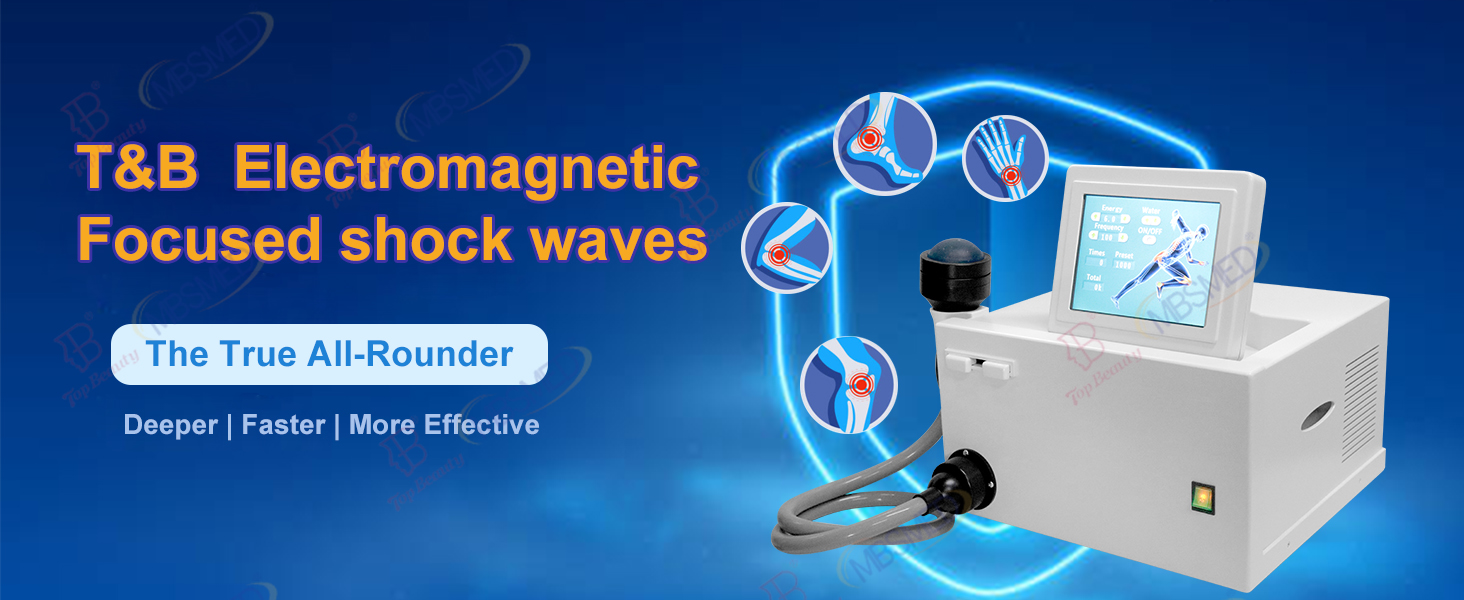
Discover how advanced focused shockwave therapy machines deliver deep‑penetrating electromagnetic energy for tendinopathy, plantar fasciitis, and sports injuries. Evidence‑based, non‑invasive, and designed for clinical precision.
A new generation of focused extracorporeal shockwave therapy (ESWT) machines is redefining non‑invasive musculoskeletal care by combining deep tissue penetration, adjustable focal depth, and strong clinical evidence. As musculoskeletal conditions affect more than 1.7 billion people worldwide according to the World Health Organization, the demand for effective, non‑surgical treatment options has never been greater.
Focused shockwave therapy devices use electromagnetic, electrohydraulic, or piezoelectric mechanisms to generate high‑intensity acoustic waves that converge at a precise point within the body, delivering concentrated mechanical energy to target tissues such as tendons, ligaments, and bone insertions. Unlike radial shockwave therapy, which disperses energy broadly across the surface with peak intensity at the skin, focused technology achieves penetration depths of up to 10–12 centimeters, making it suitable for deep‑seated pathologies.
How Focused Shockwave Technology Works
The core mechanism behind focused shockwave therapy is mechanotransduction—the conversion of mechanical energy into biological responses at the cellular level. When shockwaves reach the target tissue, they stimulate fibroblast proliferation, increase collagen synthesis, promote angiogenesis (new blood vessel formation), and modulate inflammation, collectively accelerating tissue regeneration and reducing pain.
Modern focused shockwave systems offer several technological advancements that enhance clinical utility:
Adjustable Focal Depth – Devices such as the DualWave FX use interchangeable gel pads (standoff pads) to shift the focal point more superficially or deeper into tissue, allowing clinicians to tailor treatment depth without changing handpieces or reconfiguring hardware. With seven available depth options, practitioners can adapt to a wide range of anatomical targets.
Electromagnetic Precision – Electromagnetic‑based focused shockwave machines generate stable, consistent energy output through a coil‑and‑membrane design, offering longer lifespan (applicator lasting over 500,000 shocks) and lower maintenance compared to electrohydraulic systems that require frequent electrode replacements.
Clinical Indications and Evidence Base
Focused shockwave therapy is increasingly recognized across multiple medical disciplines, including orthopedics, sports medicine, physiotherapy, urology, and rehabilitation medicine.
Sports Medicine and Orthopedics
In 2025, an international expert panel from Mass General Brigham and collaborators across 13 countries published new clinical guidelines in the British Journal of Sports Medicine, establishing consensus recommendations for ESWT use in musculoskeletal and sports medicine. The guidelines recommend shockwave therapy as part of the treatment algorithm for:
Various tendinopathies (Achilles, patellar, lateral epicondylitis)
Plantar fasciopathy
Bone stress injuries
Delayed and non‑union fractures
Sesamoiditis and medial tibial stress syndrome
Procedural recommendations include clinical focusing over areas of maximal pain without local anesthesia, treatment intervals of 1–2 weeks with a total of 3–5 sessions, and avoidance of NSAIDs throughout the treatment period.
A systematic review published in Frontiers in Medicine (2024) found that focused ESWT significantly reduced pain and improved functional impairment in patients with low back pain immediately after treatment and at one‑month follow‑up, concluding that focused ESWT is a modern physiotherapeutic method capable of treating a broad spectrum of conditions responsible for low back pain.
For athletes, ESWT is now considered a reasonable treatment option, particularly because it often requires minimal or no time away from sport, with response manifesting as early as within one to three months.
Urology Applications
Beyond musculoskeletal care, focused shockwave therapy has demonstrated efficacy in urological conditions. A 2025 systematic review and meta‑analysis comparing focused versus radial shockwave therapy for erectile dysfunction found that focused ESWT demonstrated superior efficacy, with a standardized mean difference of 0.45 (95% CI: 0.04–0.86). Additional applications include chronic pelvic pain and Peyronie’s disease.
Safety Profile and Contraindications
Focused shockwave therapy is well tolerated across diverse patient populations, including young athletes and adults, with the most common adverse events being temporary erythema and mild pain at the application site. The therapy is non‑invasive, requires no incisions or anesthesia, and involves no downtime, allowing patients to resume normal activities immediately following treatment.
Contraindications include pregnancy (particularly over abdominal and pelvic regions), malignancies at the treatment site, blood clotting disorders, and presence of pacemakers or other implanted electronic devices in the treatment field.
Focused vs. Radial Shockwave: Understanding the Difference
Both focused and radial ESWT share the fundamental principle of stimulating tissue repair with acoustic energy, but they differ significantly in wave generation and delivery:
| Feature |
Focused ESWT |
Radial ESWT |
| Energy Distribution |
Converges at defined focal point |
Radiates outward, broad and divergent |
| Peak Intensity |
At focal depth (up to 10–12 cm) |
At skin surface (effective 3–4 cm) |
| Technology |
Electromagnetic / electrohydraulic / piezoelectric |
Compressed air projectile |
| Best Suited For |
Deep, localized pathologies |
|
Market Outlook and Industry Growth
The global shockwave therapy market is experiencing rapid expansion, driven by increasing prevalence of musculoskeletal disorders, growing preference for non‑invasive treatment modalities, and technological advancements in device design. According to recent market analyses, the increasing adoption of ESWT in sports medicine, orthopedics, and physical therapy settings is a key growth driver, with healthcare providers seeking versatile, evidence‑backed devices that deliver measurable patient outcomes.
For medical device distributors, clinic owners, and healthcare practitioners, investing in focused shockwave technology represents an opportunity to expand service offerings, attract new patient populations, and differentiate clinical practices in an increasingly competitive landscape.
Conclusion
Focused shockwave therapy machines represent a significant advancement in non‑invasive musculoskeletal treatment, combining deep tissue penetration, adjustable focal depth control, and a robust evidence base spanning tendinopathies, bone injuries, low back pain, and urological conditions. With international clinical guidelines now supporting its use and ongoing research continuing to validate its efficacy, focused ESWT is poised to become a standard component of modern rehabilitative and sports medicine practice.
Healthcare professionals interested in incorporating focused shockwave therapy into their clinical offerings are encouraged to evaluate devices based on technological specifications, clinical evidence, and workflow integration capabilities to ensure optimal patient outcomes.